A Day of Volunteering
Kara Vargas walks through a day of volunteering at Blackwood, from the quiet of the morning to the moment the farm starts giving something back.
By Kara Vargas
The morning at Blackwood begins before you ever put your hands in the soil.
You notice the quiet first.
Not silence exactly, the farm is never truly silent.
There are birds moving through the trees. Insects hum through the grasses. The occasional call of an animal. The sound of boots making their way across the ground.
Somewhere nearby, someone is already working.
The day is beginning.
Volunteers arrive at Blackwood from different places and for different reasons.
Some come because they want to learn how food is grown.
Some want to understand regenerative agriculture.
Others simply want to spend a day outside doing something tangible and useful.
Most arrive not quite knowing what the day will hold.
That is part of volunteering on a farm.
The work follows the land's needs, and the land does not always follow a schedule.
A plan to plant seedlings may change because a bed needs to be prepared first. A morning intended for harvesting might become a lesson in compost, irrigation, weeds, or weather.
Farming requires observation, before doing, you learn to look.
What is growing here?
What needs attention?
What has changed?
What is the soil telling us?
At Blackwood, these questions matter because this is a working regenerative farm.
The goal is not simply to grow something and take it from the ground.
The work is about relationships.
With soil.
With water.
With plants and animals.
With insects.
And with the people who gather around food.
Soon, gloves are pulled on, and the real work begins.
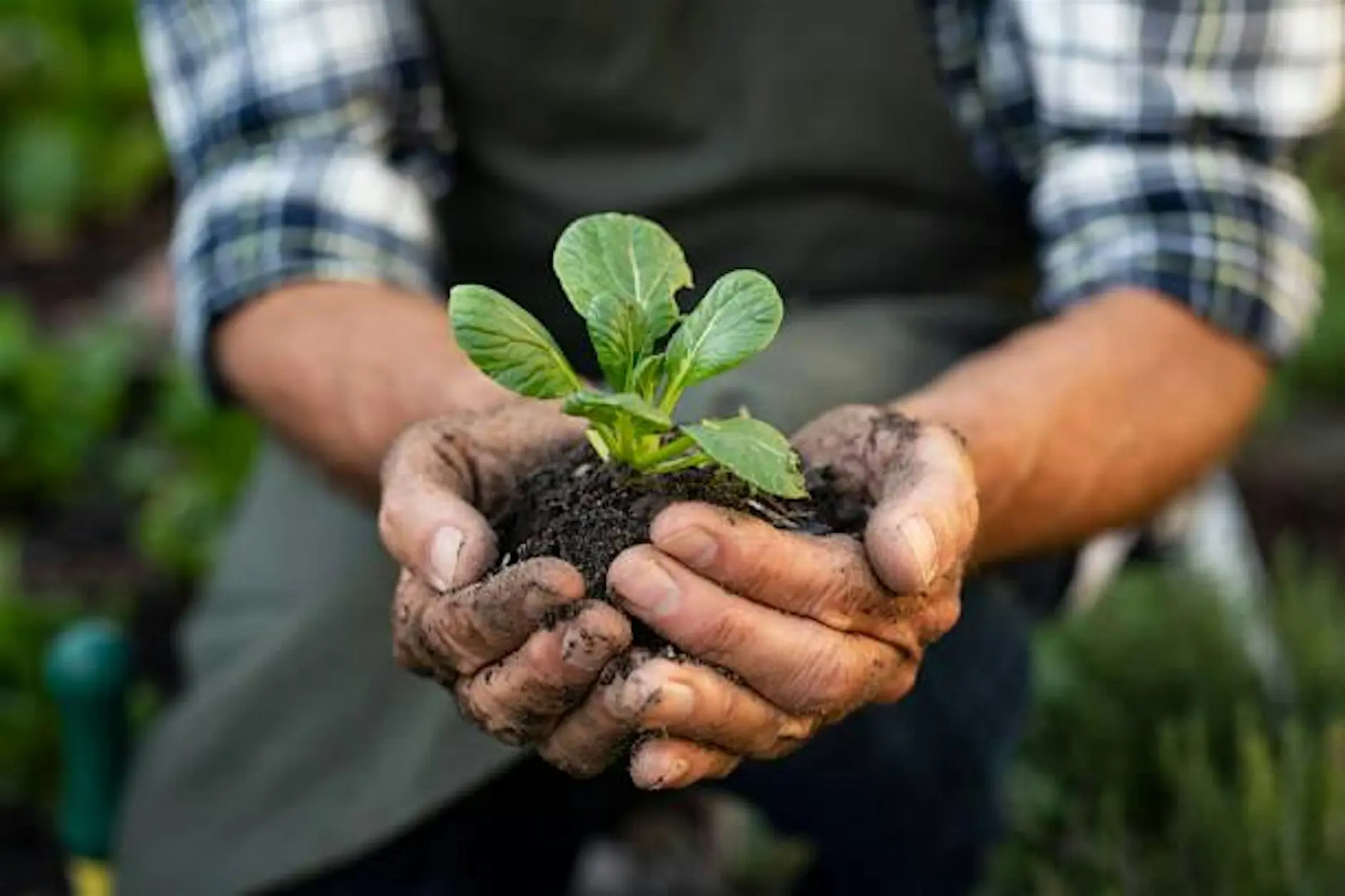
Hands reach into garden beds.
Weeds are crimped or cut back, leaving their roots in the soil.
Compost is moved.
Seeds disappear beneath a thin layer of soil with the hope that something will emerge days or weeks later.
There is something satisfying about farm work because progress can often be seen.
An overgrown bed becomes clear.
An empty row becomes a row of seedlings.
A pile of compost becomes nourishment for the soil.
A harvest basket slowly fills.
But volunteering at Blackwood is not simply about completing a task.
It is about understanding why the task matters.
Crimping or cutting back a weed becomes a conversation about nutrients, water, and the importance of leaving living roots in the soil.
Compost becomes a lesson in soil biology and the extraordinary amount of life beneath our feet.
Planting becomes a lesson in seasonality.
An insect in the garden raises another question.
Is it a pest?
A pollinator?
Or simply another resident of the farm doing exactly what it was designed to do?
Little by little, the farm becomes less like scenery.
And more like a living system.
By midday, everyone looks a little different than when they arrived.
Shoes are dusty.
Hands are dirty.
People who may have been strangers a few hours earlier are passing tools, carrying baskets, asking questions, and sharing stories.
Work has a way of making introductions easier.
And somewhere along the way, you begin to understand something.
You did not come to Blackwood simply to “help the farm.”
For a few hours, you become part of its rhythm.
You contribute to something already in motion.
Someone cared for the soil before you arrived.
Someone planted the seeds.
Someone prepared the bed you are working in.
Someone will water the seedlings after you leave.
Another group may harvest what you planted.
Eventually, something grown here may find its way into a kitchen, onto a table, or into the hands of someone learning where food actually comes from.
The work connects people who may never stand in the same field together.
That is one of the quiet lessons of agriculture.
Very little happens alone.
Plants depend on soil.
Soil depends on microorganisms and organic matter.
Pollinators move from flower to flower.
Water moves through the landscape.
Farmers depend on community.
And communities depend on farms.
As the afternoon settles in, tools are gathered and beds are checked one more time.
Perhaps the difference is obvious.
A newly planted row.
A cleared pathway.
A restored garden bed.
Perhaps it is almost invisible.
That does not make the work less important.
Because regeneration is rarely one dramatic act.
It is thousands of small acts of stewardship repeated over time.
Adding compost.
Protecting soil.
Saving water.
Planting diversity.
Creating habitat.
Growing food.
Teaching someone.
Welcoming someone.
Returning tomorrow and doing the work again.
You do not need to arrive at Blackwood knowing how to farm.
You do not need to recognize every plant or understand everything happening beneath the soil.
You only need to arrive willing to learn.
Willing to work.
And willing to pay attention.
Because somewhere between the first task of the morning and putting away the last tool of the afternoon, something shifts.
You begin to notice more.
The texture of healthy soil.
The smell of herbs when your hand brushes against them.
The shade beneath a tree.
The astonishing amount of life occupying a small patch of ground.
And you begin to understand that food does not begin at a grocery store.
It does not even begin in a kitchen.
It begins here.
In soil.
In sunlight.
In water.
In seeds.
And in the hands of people willing to care for all of it.
At the end of the day, you may leave Blackwood tired.
You may leave dirty.
Hopefully, you leave curious.
Because that is the thing about spending a day working with the land.
You come to Blackwood thinking you are volunteering your time.
Then the farm gives you something in return.
A chance to reconnect.
A reason to pay attention.
And a reminder that caring for the land is not work that belongs only to farmers.
It belongs to all of us.
Be a part of the regenerative movement
Reconnect with the land, grow real food, and be a part of restoring the earth in a tangible, meaningful way.