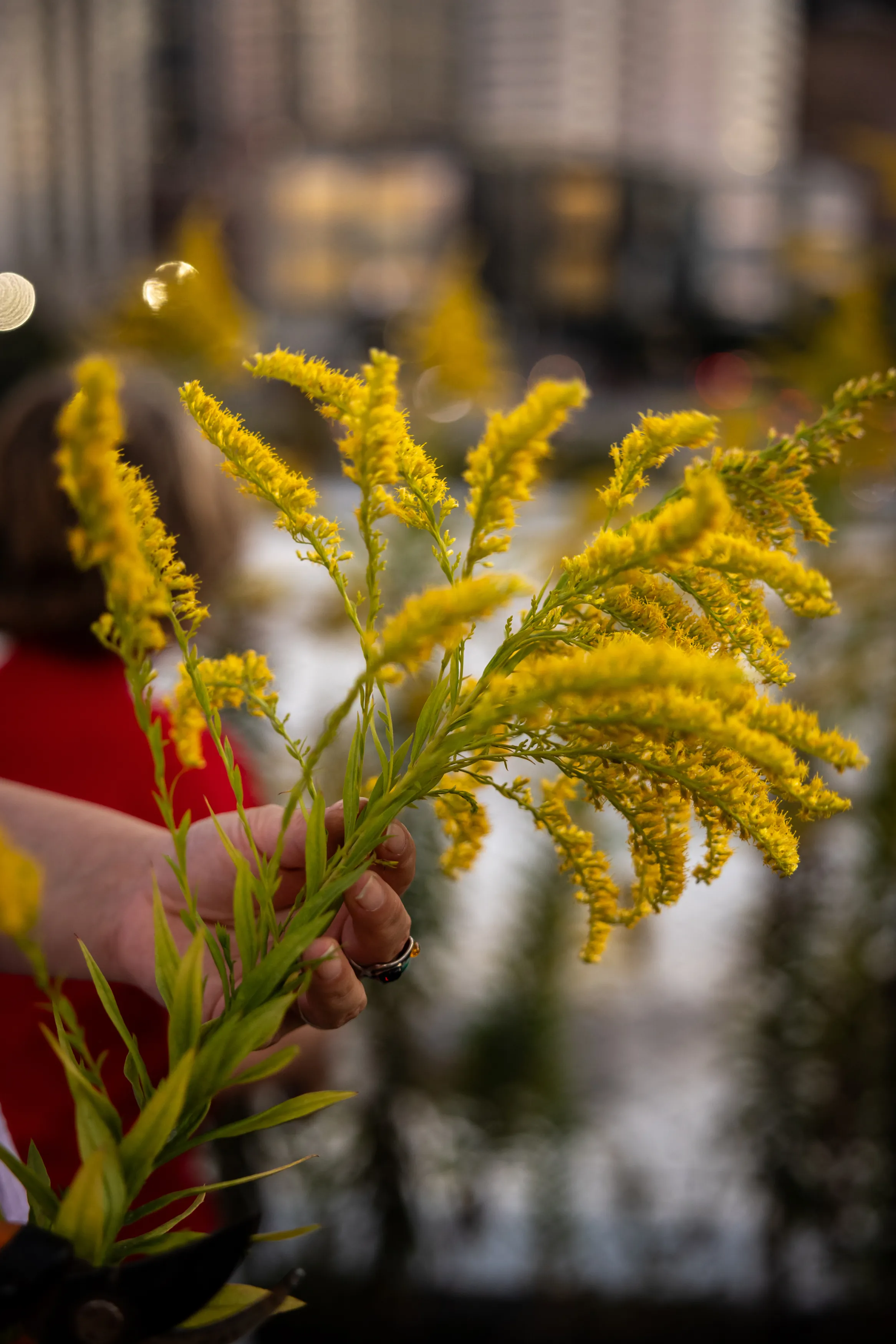
Aldo Leopold’s ‘Land Ethic’
Hayley Webster Guerra reads Aldo Leopold’s land ethic through her own family’s farm, where the Golden Rule means treating the land as you would want to be treated.
By Hayley Webster Guerra
The Golden Rule
A metafictional story about stewardship and familial estates
“A thing is right when it tends to preserve the integrity, stability and beauty of the biotic community. It is wrong when it tends otherwise.”
— Aldo Leopold, A Sand County Almanac and Sketches Here and There
Imagine waking in the morning.
The sun is beginning to peek through the clouds and curtains. You slip on your slippers and make your way to the kitchen, filling a vintage kettle with water. It belonged to your grandmother. The stove is lit, the kettle placed on the fire.
As the water heats, you reach for your favorite mug and listen to the rooster crow. Soon the kettle whistles. You make tea—yaupon, moringa, and tulsi—and step outside into the cool morning air.
Perhaps you are overlooking a pasture where bees dance among grasses and wildflowers. Perhaps you are watching a mountainside rise into the sky. Maybe you are surrounded by trees, listening to birds, leaves, and squirrels moving below.
Whatever the view, it is a place cherished for generations.
Your mother’s mother’s mother drank tea in this very spot for nearly a hundred years. Someday, perhaps, your children’s children’s children will sit here too.
This is what Aldo Leopold helped me understand: land is not simply something we own. It is a living community.
Leopold, the great conservationist and ecologist, wrote A Sand County Almanac and Sketches Here and There in 1949. His writing taught me to see soil, water, plants, animals, and people as members of one interconnected community.
Our family has lived this idea for generations.
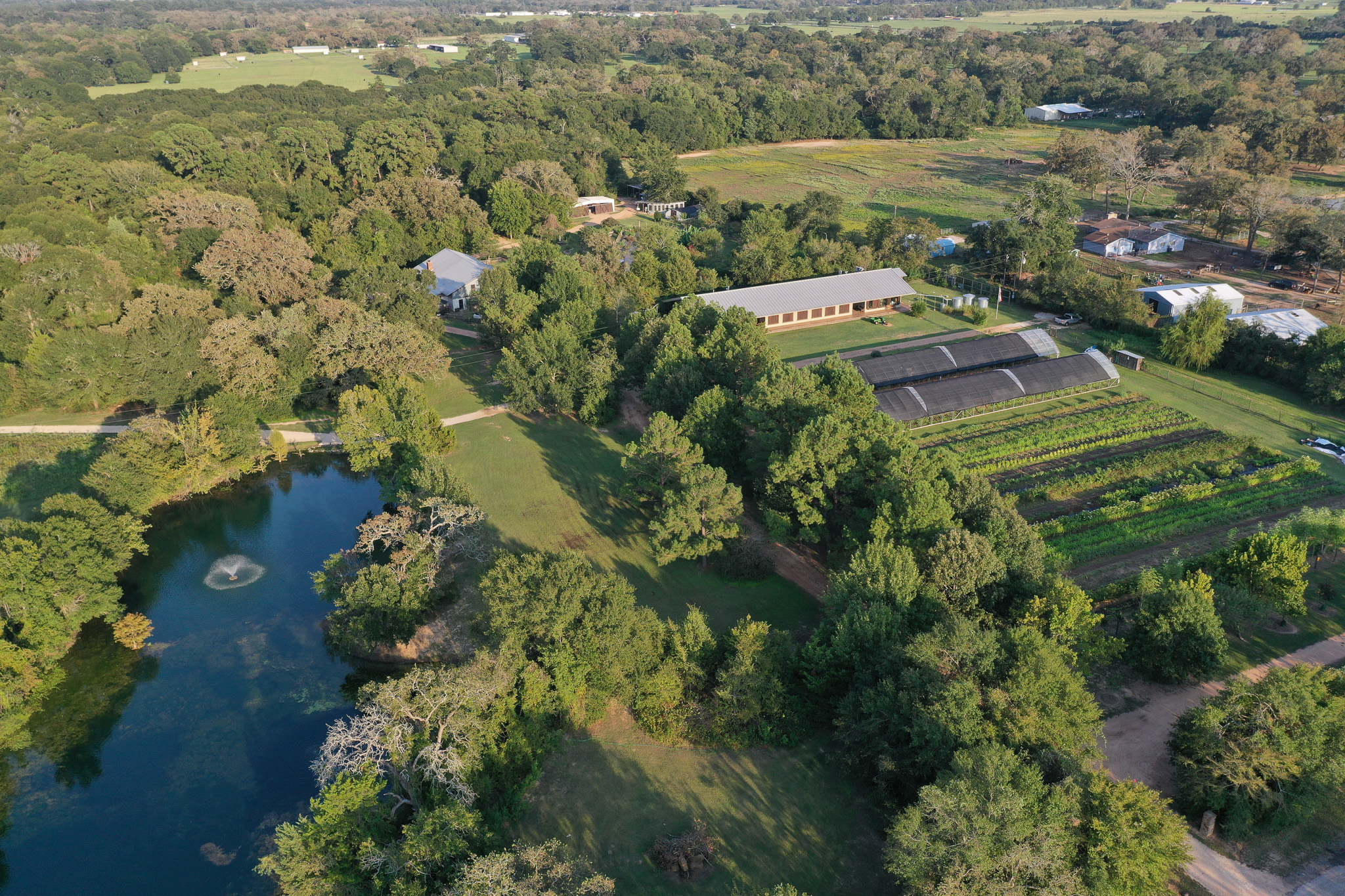
Our land was intended for farming and passed down through multiple generations. My mother was raised here, as was her mother and grandmother before her. Our fathers, grandfathers, and great-grandfathers built homes, worked the land, raised animals, and provided food and materials for their families.
The land provided for us then, and it provides for us now.
Around our table and in our garden, we gather, harvest, cook, and celebrate. We preserve what the land gives us—jams and jellies, salsas and sauces, broths and pickles—and share them with friends and neighbors.
We understand that we are not alone.
I often watch migrating birds stop at our pond. Their lives depend on finding food and shelter along a journey they make year after year. Sometimes I see a single goose flying during hunting season and wonder about the family it has left behind.
Our farm is much like those geese. We may not migrate, but we depend upon one another. The foundation of our farm is family, and none of us can do this alone.
For generations, our farm has functioned as a self-sustaining system. My family rejected the idea that productivity must come through industrial overproduction. Instead, we stayed connected to the land. We listened to it, learned its language, and taught our children to listen too.
This is what Leopold called a land ethic—an intellectual and emotional shift that recognizes humanity not as conqueror of nature, but as a member of the natural community.
For us, it is the Golden Rule:
Treat the land as you would want to be treated.
That begins with the soil.
Weak soil produces weak crops. Healthy soil produces life.
Soil is its own microscopic world—a community of organisms working beneath our feet. When we destroy it, we lose more than dirt. We lose fertility, resilience, and future possibility.
Our methods for restoring and protecting soil are simple.
We practice minimal tillage so we do not disturb the homes of the microbes that feed our plants. We add organic matter through compost and worm castings. We brew compost tea to nourish plants naturally. We use living roots and mulch to protect the soil surface from the sun, wind, drought, and heavy rain.
And we do not rush to eliminate every weed.
Instead, we recognize that living roots help hold soil in place, reduce erosion, and allow water to move into the ground rather than simply running away.
The goal is not to control every part of nature.
The goal is to work with it.
Companion planting, diverse crops, livestock, timber, wildlife, and healthy soil create a system that is more resilient than one dependent upon a single crop or commodity.
Our family has learned that true wealth comes in two forms.
There is tangible wealth: crops we grow to eat or sell, animals we raise, and food we preserve.
Then there is intangible wealth: healthy soil, pollinators, biodiversity, knowledge, family identity, and the relationships built by working together.
By allowing nature to perform services such as pollination, nutrient cycling, and pest control, we have reduced our dependence on expensive synthetic fertilizers and pesticides.
But perhaps the greatest wealth is what cannot be measured on a balance sheet.
It is the knowledge passed from one generation to another.
It is knowing where the water runs after a storm. Knowing when the soil needs rest. Knowing which plants belong together. Knowing that a healthy farm is not simply productive today—it must remain capable of renewing itself tomorrow.
Working this land has built our family identity. We inherited more than acreage. We inherited responsibility.
We have watched other families lose estates because property, money, or land was left undocumented, unmanaged, or unclaimed after a relative died. Stewardship therefore requires more than good intentions. It requires planning for those who come after us.
We seek professionals who understand heirship and estate planning so that the generation after the next can inherit not only the land, but the opportunity to care for it.
That is the Golden Rule.
It is stewardship with a long memory.
It is understanding that we do not truly own the land. For a brief time, we are its caretakers.
My dream is to live this way—to keep learning, keep loving, and keep sharing what the land teaches us.
Because the future of a family, a farm, and a community depends upon the same thing: our willingness to understand that we belong to something larger than ourselves.
The land is not ours simply to possess.
It is ours to know.
Ours to nurture.
Ours to pass forward.
And if we are fortunate, when the next generation sits outside with a warm cup of tea, listening to the birds and watching the bees move through the wildflowers, they will inherit something more valuable than property.
They will inherit a living relationship with the land.
Live well with land ethic—the Golden Rule
Be a part of the regenerative movement
Reconnect with the land, grow real food, and be a part of restoring the earth in a tangible, meaningful way.