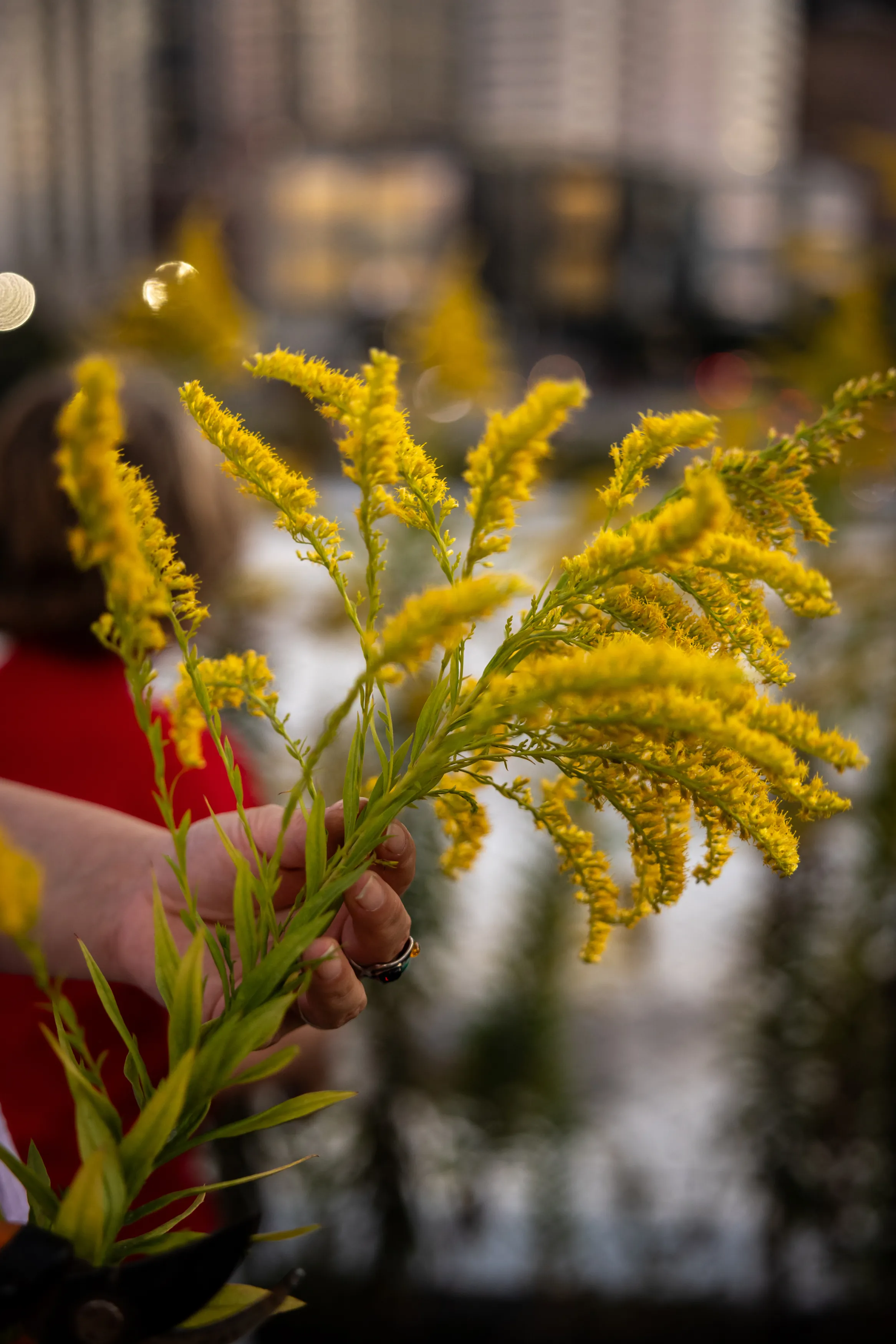
What We Don’t Know Yet
Cath Conlon on a visit to the Danforth Plant Science Center, a quinoa plant that already knew how to handle salt, and why Blackwood wants to keep asking what we don’t know yet.
By Cath A. Conlon
One of the questions we ask ourselves almost every day at Blackwood is a simple one:
How do we know what we know?
The work we do—soil health, microbes, nutrient-dense food, regenerative agriculture, climate, children, adults, biodynamic farming—is constantly changing because the world around us is constantly changing. New research emerges. New questions surface. Plants reveal things we didn’t know they could do. Our understanding of how the human body receives and uses food deepens.
So if we are going to invite people onto our land to learn from us, we have an obligation to keep learning ourselves.
Because when a school comes to Blackwood, or a family, or an individual, they don’t simply spend a few hours on the farm and leave. They take something home. They plant something. They change the way they eat. They change the way they teach their children. They change the way they think about soil.
And why would they come back if we weren’t changing, too?
For years, one of the places we went to stretch our thinking was Bioneers in California. Bioneers brings together four great dimensions of human life: environment, social justice, health, and spirit. I think about those four pillars often. We need all four if we are going to become whole human beings—if we are going to approach our own best, most fully realized selves.
We also used to travel to Prairie Fest in Salina, Kansas, hosted by The Land Institute. When Prairie Fest paused for a few years, I started looking for another place we could learn from?
We found the Danforth Plant Science Center in St. Louis.
So we went.
There are roughly 350 PhD scientists working under one roof. Scientists who spend their days asking questions most of us would never think to ask.
And there was something else that stopped me in my tracks:
Many scientist are paired with an artist.
The reason is fascinating. Scientists can look at an X-ray or an image of a plant and understand what they are seeing. But sometimes an untrained eye needs help seeing it. The artist gives shape and definition to the plant’s structures, helping us see what is otherwise invisible.
Science discovers.
Art helps us see.
And somewhere between the two, understanding begins.
I arrived at the Danforth Plant Science Center carrying a question that had been bothering me.
The planet is getting hotter. We know that. Ice is melting. Sea levels are rising. And as oceans rise, there is an inevitable question for anyone who cares about growing food:
What happens when salt water reaches farmland?
More specifically:
How will we grow food in soil that is becoming increasingly salty—and how will we keep that salt out of the food we eat?
I asked the scientist.
His face lit up.
“I know exactly what you’re asking.”
He pulled up an image of a quinoa plant.
And then he told me something I will never forget.
Quinoa can grow in salty conditions. Its roots take up water containing salt. That water travels upward through the plant. But before the water reaches the grain, the plant has a remarkable system of salt bladders near the top of the stem.
The bladders collect the salt.
The plant separates it.
And the water that continues upward to the grain is fresher.
I stood there amazed.
Not because quinoa had performed a miracle.
But because the plant already knew something we didn’t know.
And that is the lesson I brought home.
Maybe our greatest challenge isn’t simply learning more.
Maybe it is learning to ask better questions.
What don’t we know about the soil beneath our feet?
What don’t we know about the billions of microbes working beneath the surface?
What don’t we know about how plants communicate, adapt, protect themselves, and nourish us?
What don’t we know about how our bodies receive food?
What don’t we know about what children need to become healthy, curious, capable human beings?
What don’t we know about farming in a changing climate?
At Blackwood, we don’t want to be a place that has all the answers.
We want to be a place that is always asking the next question.
Because the people who come to our farm deserve more than what we knew yesterday.
They deserve a place that is learning today—so that together, we can imagine what becomes possible tomorrow.
The future belongs, in part, to those willing to ask: What don’t we know yet
Be a part of the regenerative movement
Reconnect with the land, grow real food, and be a part of restoring the earth in a tangible, meaningful way.